Addressing critical gaps in access, affordability, and quality in rural India through 5 telehealth-enabled centers.
Bridging the divide between underserved populations and qualified specialists.


Moving from ‘establishing presence’ to ‘deepening impact’ by focusing on:
The e-Aarogya Kendra project is a technology-driven healthcare initiative designed to provide essential medical services to rural communities in Hoskote, Karnataka. Supported by AkzoNobel and managed by the Telerad Foundation, the program utilizes telemedicine and AI-powered diagnostics to connect underserved populations with qualified doctors.
Villagers benefit from free nurse-assisted consultations, specialist care, and basic medications, which effectively removes geographic and financial barriers to treatment. Beyond clinical care, the initiative conducts community outreach and thematic health camps to promote long-term awareness and preventive health practices. Through this integrated model, the project aims to improve health-seeking behaviour and ensure sustainable, high-quality care for vulnerable groups.
Since its inception in 2018, the initiative has demonstrated measurable improvements in healthcare access and utilisation, particularly among women, children, older adults, and individuals living with chronic conditions. By eliminating out-of-pocket expenditure for consultations, medicines, and basic diagnostics, and by reducing the need for travel to urban hospitals, the programme strengthens trust in formal healthcare systems and encourages timely health-seeking behaviour.
The current phase focuses on consolidating and deepening impact across existing centres, with emphasis on preventive care, continuity of services, systematic follow-up, and robust monitoring aligned with CSR objectives.

Distance, reliable and affordable public transport remains major barriers to access public health facilities.

High out-of-pocket expenses for basic diagnostics, medicines, and travel to urban centers.

Rising Non-Communicable Diseases (NCDs) alongside persistent issues like child malnutrition and maternal mortality risks.
Large sections of India’s rural population continue to experience barriers to healthcare due to limited infrastructure, affordability constraints, gaps in health awareness, and a rising burden of non-communicable diseases. Maternal and child health indicators further highlight the consequences of delayed care-seeking and inadequate preventive services.
A network of 5 centers acting as a digital bridge between rural patients and urban specialists.

Local villager arrives at center (9 AM – 5 PM).

Vitals check, history taking, and AI-enabled diagnostics by ANM/GNM

Video link with Specialist or General Physician.

E-prescription, free medicine dispensing, or hospital referral.
Technology-enabled healthcare delivery models—particularly telemedicine supported by trained frontline health workers—offer a practical pathway to address these challenges. By bringing qualified medical expertise closer to communities, such models reduce delays in diagnosis, lower household healthcare expenditure, and promote earlier engagement with healthcare systems.
The e-Aarogya Kendra programme was conceptualised within this context to deliver accessible, continuous, and preventive primary healthcare closer to rural populations.
Established in November 2018, e-Aarogya Kendra is a network of five telehealth-enabled primary care centres operating across villages in Hoskote Taluk, Bengaluru Rural District, Karnataka.
Each centre is anchored by trained Auxiliary Nurse Midwives (ANMs) or General Nurse Midwives (GNMs), who act as the first point of contact for patients. They support patient registration, clinical assessments, diagnostics, teleconsultation facilitation, medicine dispensing, follow-up counselling, and community outreach.
Teleconsultations with general physicians and specialists ensure that patients receive timely and appropriate medical advice without the need to travel to urban hospitals.
The e-Aarogya Kendra follows a structured nurse-assisted telehealth care delivery model,
ensuring continuity and efficiency. Typical patient pathway:


The programme is delivered through a multidisciplinary care team, comprising:
Moving beyond curative care to holistic health management.
A defining feature of the e-Aarogya Kendra model is the availability of on-site diagnostic services performed by trained ANMs/GNMs, integrated with teleconsultations.
Key diagnostic and screening services include:These diagnostics enable early risk identification and timely clinical intervention.
Activities are delivered through community meetings, camps, doctor video talks, flyers, home visits, and digital communication in local languages.

Breast Cancer, Anaemia, Hygiene, Family Planning.

Nutrition, Weaning, Hygiene, Tobacco Prevention.

Fatty Liver, Diabetes, Hypertension.

Video talks, WhatsApp (local language), Flyers, Group Sessions.
Each centre operates as a fully equipped primary care unit, supported by:
This infrastructure enables consistent service delivery and outcome tracking.
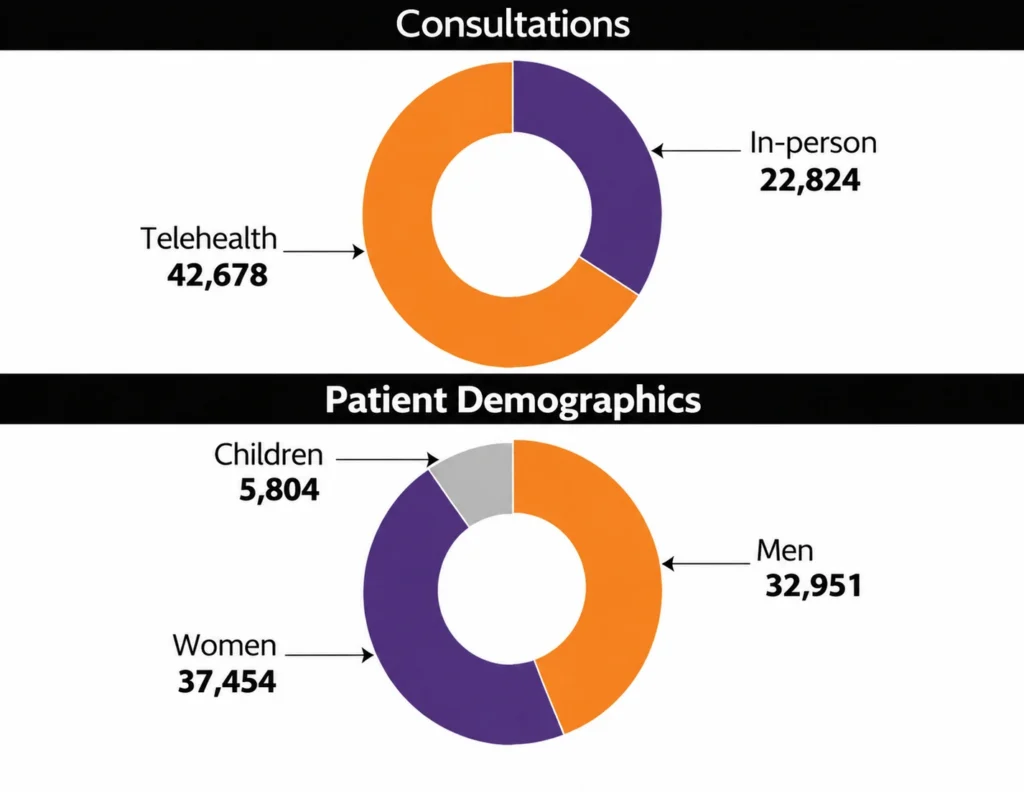
Five operational centers serving ~50,000 people across Hoskote Taluk.
| Centre | Location | Villages Covered | Approx. Population | Operational Since | Operating Days |
|---|---|---|---|---|---|
| Begur | Begur Village | 8 | 12,675 | Nov 2018 | Mon, Wed, Fri |
| Kurubrahalli | Kurubrahalli Village | 6 | 6,875 | Feb 2019 | Tue, Thu, Sat |
| Karahalli Yeshwanthpur | Nandagudi PO | 7 | 9,945 | Sep 2021 | Tue, Thu, Sat |
| CT Golahalli | CT Golahalli Village | 4 | 8,785 | Sep 2021 | Mon, Wed, Fri |
| Dabbagunte | Dabbagunte Village | 4 | 6,490 | May 2024 | Wed |
| Covers | Does Not Cover |
|---|---|
|
|
Data as of December 2025
Providing essential care to the community.
Activities are delivered through community meetings, camps, doctor video talks, flyers, home visits, and digital communication in local languages.
General Health,
Diabetes,
Hypertension
Women’s Health,
Pediatric,
Cardiac
Anaemia,
Hypertension,
Diabetes
Women’s Health,
Pediatric,
Cardiac